
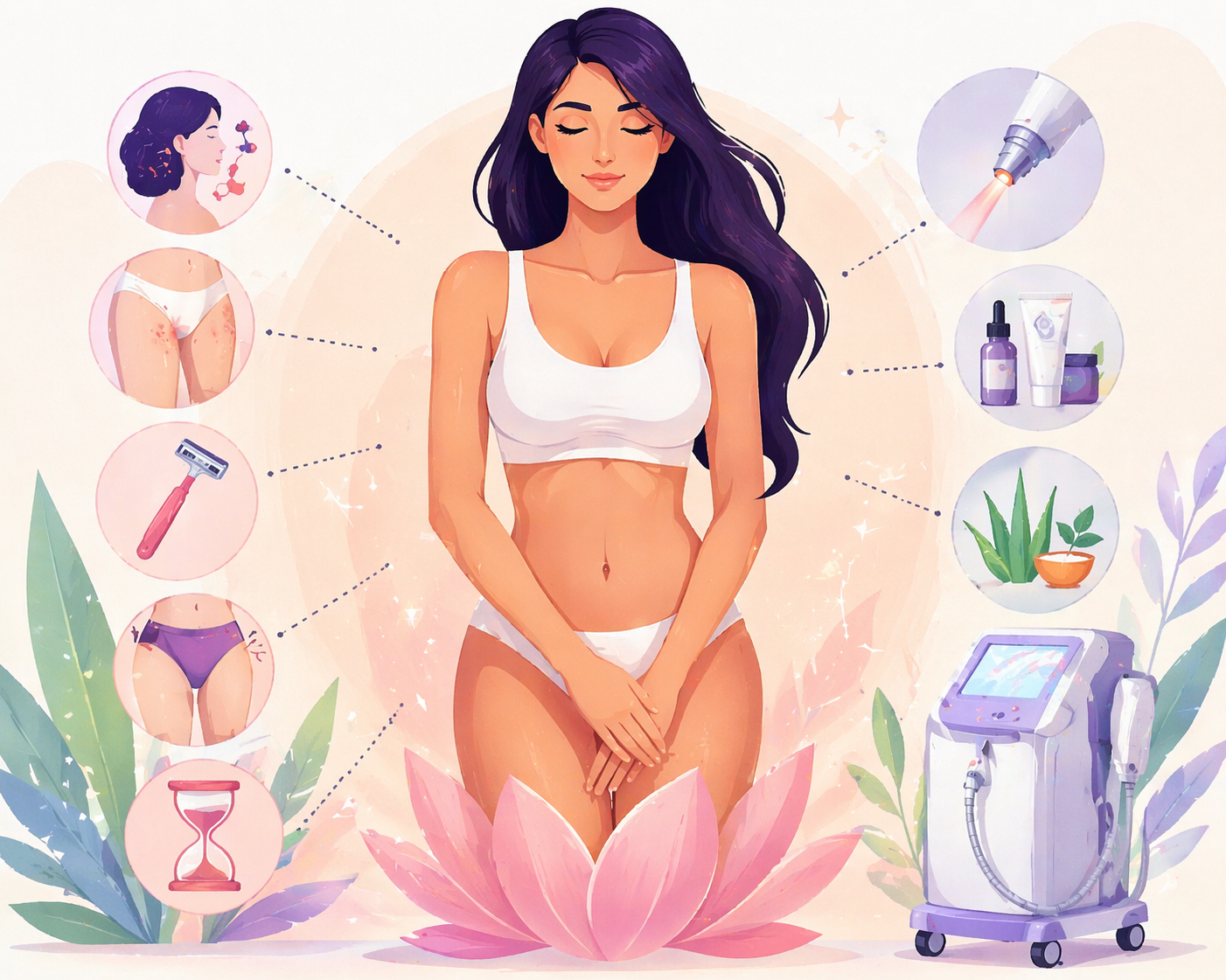
Skin darkening in the intimate area is a common concern among women, yet it is rarely discussed openly. Many people worry that it indicates a health issue, but in most cases, it is completely natural. However, understanding the causes and available solutions can help you make informed decisions about your body and care.
Common Causes of Intimate Area Darkening
1. Hormonal Changes
Hormonal fluctuations during puberty, pregnancy, or menopause can lead to increased melanin production, causing the skin in intimate areas to appear darker.
2. Friction
Constant rubbing from tight clothing, undergarments, or skin-to-skin contact can trigger pigmentation over time.
3. Ageing
As the body ages, changes in skin texture and pigmentation are natural, including darkening in sensitive areas.
4. Hair Removal Methods
Frequent shaving or the use of harsh hair removal creams may irritate the skin, leading to pigmentation.
5. Medical Conditions
Conditions like obesity, insulin resistance, or certain skin disorders can contribute to darker skin in folds and intimate regions.
Is It Normal?
Yes, in most cases, intimate area pigmentation is completely normal and varies from person to person. However, if the darkening is sudden, severe, or associated with itching or irritation, it is best to consult a specialist.
Modern Solutions for Intimate Pigmentation
1. Topical Treatments
Dermatologist-recommended creams can help reduce pigmentation gradually. It is important to avoid over-the-counter products without guidance, as sensitive skin requires expert care.
2. Laser Treatments
Advanced laser therapies are one of the most effective solutions for genital skin lightening. These treatments target excess melanin safely and help achieve a more even skin tone over time.
3. Chemical Peels (Mild & Medical Grade)
Specially formulated peels for sensitive areas can gently exfoliate and improve skin tone when performed under professional supervision.
4. Lifestyle Changes
- Maintain good hygiene
- Wear breathable, loose-fitting clothing
- Follow a balanced diet
- Avoid harsh products
These small steps can prevent further pigmentation and support skin health.
Things to Keep in Mind
✔ Always consult a qualified specialist before starting any treatment
✔ Avoid DIY or unverified remedies
✔ Results vary based on skin type and condition
✔ Consistency and proper aftercare are key
Conclusion
Intimate area skin darkening is usually a natural and harmless condition, but it can still affect confidence for many women. The good news is that with the right guidance, safe treatments, and healthy lifestyle habits, it can be managed effectively.
If you are concerned about pigmentation or exploring treatment options, consulting a specialist is the best first step. For expert guidance and advanced cosmetic gynaecology treatments, you can contact Dyusculpt Aesthetic Clinic to learn more about safe and personalised solutions.
Taking care of your intimate health is an important part of overall well-being—and with the right support, you can feel confident and comfortable in your own skin.