
Introduction
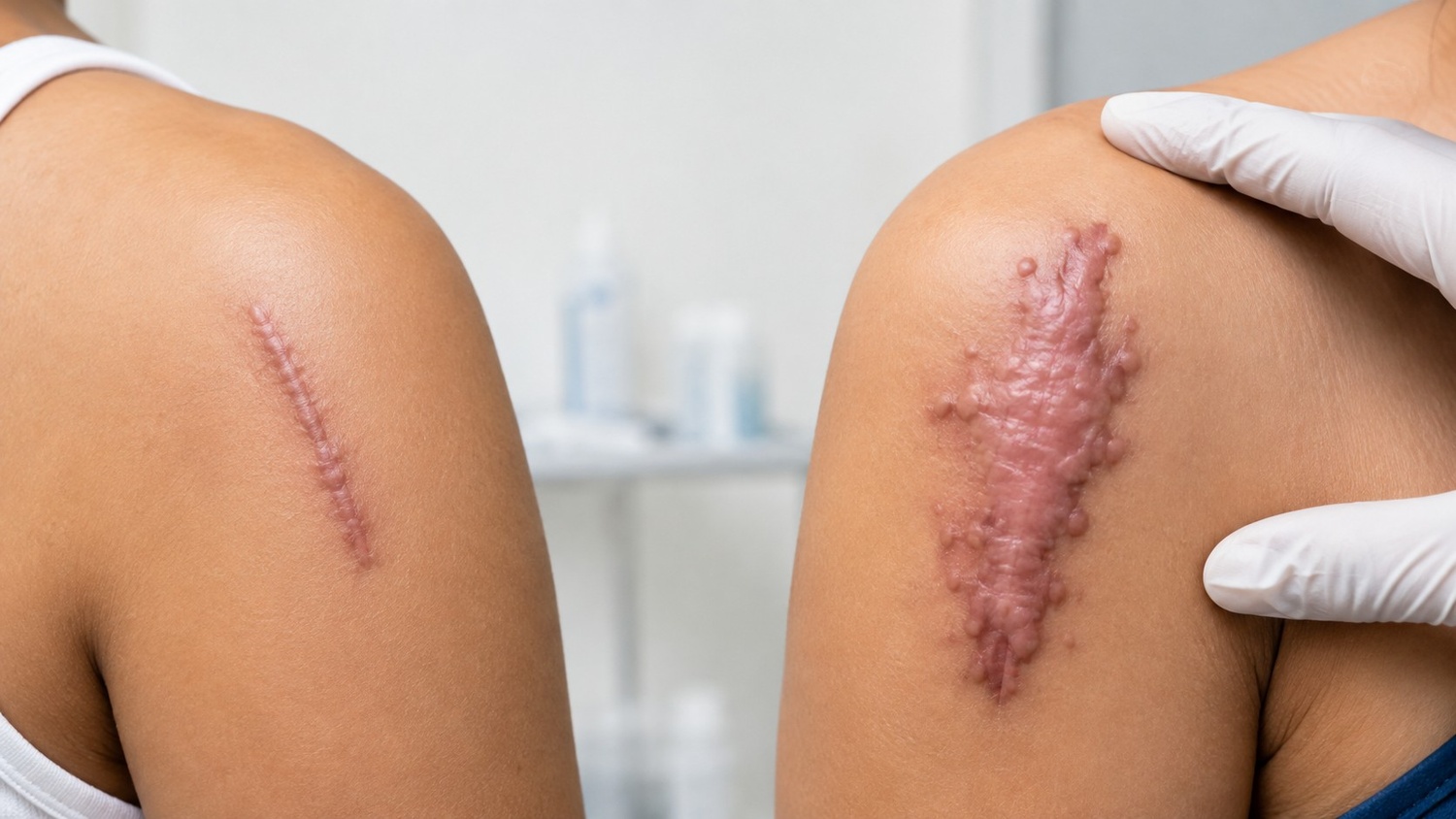
Not every raised scar is a keloid. Some raised scars are classified as hypertrophic scars, which can look similar but behave differently over time. Understanding whether you have a keloid or hypertrophic scar is important because each type may require a different treatment approach.
Both conditions develop when the body produces excess scar tissue during the healing process. However, their growth pattern, appearance and likelihood of improving naturally are not the same.
What Is a Keloid Scar?
A keloid is a thick, raised scar that grows beyond the boundaries of the original wound. It may develop after surgery, an injury, acne, burns, injections, tattoos or body piercings. In some cases, a keloid may appear even after a very minor skin injury.
Keloids can gradually become larger than the wound that caused them. They are commonly found on the chest, shoulders, upper back, neck, jawline and earlobes. Unlike many other scars, keloids usually do not flatten or fade significantly without treatment.
A keloid may appear:
- Firm, smooth and raised
- Pink, red, brown or darker than the surrounding skin
- Itchy or painful
- Tender when touched
- Larger than the original wound
- Irregular or rounded in shape
Keloids are not cancerous or contagious. However, they can cause discomfort, restrict movement when they form near a joint and affect a person’s confidence.
What Is a Hypertrophic Scar?
A hypertrophic scar is also thick and raised, but it remains within the boundaries of the original injury. It often develops after a deep cut, burn, surgery or wound that took a long time to heal.
Hypertrophic scars may initially appear red, firm and raised. Unlike keloids, they often become flatter and less noticeable with time. However, this improvement may take several months or longer.
A hypertrophic scar may:
- Remain limited to the original wound
- Develop within weeks after an injury
- Feel firm, itchy or sensitive
- Become less red over time
- Gradually flatten without extensive treatment
- Cause tightness when located near a joint
Keloid vs Hypertrophic Scar: What Is the Main Difference?
The easiest way to differentiate the two is to look at how far the scar has grown.
A hypertrophic scar remains inside the edges of the original wound. A keloid extends outside the original wound and grows into the surrounding healthy skin.
| Feature | Keloid Scar | Hypertrophic Scar |
|---|---|---|
| Growth pattern | Extends beyond the original wound | Remains within the original wound |
| Time of appearance | May appear months after the injury | Usually develops within weeks |
| Natural improvement | Rarely fades without treatment | May flatten gradually |
| Growth | May continue growing | Usually stops growing after a period |
| Recurrence | More likely to return after treatment | Generally less likely to recur |
| Common areas | Chest, shoulders, ears, neck and upper back | Can develop over any injured area |
| Symptoms | Itching, tenderness, pain or tightness | Itching, redness, stiffness or tenderness |
Although these differences can be helpful, a medical examination may be needed to identify the scar correctly.
Why Do These Raised Scars Develop?
Scarring is a normal part of wound healing. After the skin is injured, the body produces collagen to repair the damaged area. Keloids and hypertrophic scars develop when the healing response produces more collagen and scar tissue than necessary.
Several factors may increase the possibility of developing a raised scar:
- A personal or family history of keloids
- Delayed wound healing
- Infection or inflammation around a wound
- Burns or deep injuries
- Surgical incisions
- Acne or chickenpox
- Tattoos and body piercings
- Repeated tension or movement across the wound
- Skin injuries on the chest, shoulders, ears or upper back
Keloids can affect anyone, but they occur more frequently in people with darker skin tones and those who have a genetic tendency to develop them.
How Are Keloids and Hypertrophic Scars Diagnosed?
A dermatologist or plastic surgeon can often identify the type of scar by examining its appearance, location and growth pattern. The doctor may ask:
- When the scar first appeared
- Whether it has continued to grow
- What caused the original wound
- Whether the scar is painful or itchy
- Whether you or a family member has developed keloids before
- Whether the scar has previously been treated
In unusual cases, additional evaluation may be recommended to rule out another skin condition.
Treatment Options for Raised Scars
Treatment depends on the type, size, thickness, location and symptoms of the scar. No single method works equally well for every person, especially when treating keloids. A combination of treatments may be recommended.
1. Silicone Gel or Silicone Sheets
Silicone gel and sheets are placed over a fully healed wound. Regular use may help soften, flatten and reduce the redness of hypertrophic scars and some keloids.
2. Corticosteroid Injections
Corticosteroid medicine can be injected directly into the scar. These injections may reduce inflammation, itching, pain and scar thickness. Several treatment sessions may be required.
3. Pressure Therapy
Pressure garments or earrings may be recommended, particularly for scars caused by burns or ear piercings. Consistent pressure can help limit excessive scar growth.
4. Cryotherapy
Cryotherapy freezes the scar tissue using extremely cold temperatures. It is generally more suitable for smaller keloids and may be combined with corticosteroid injections.
5. Laser Treatment
Laser procedures may help reduce redness, improve texture and flatten certain raised scars. Multiple sessions may be needed, and laser treatment is often combined with other therapies.
6. Scar Revision Surgery
Surgery may be considered for large, painful or movement-restricting scars. However, removing a keloid through surgery alone may cause another keloid to develop. Doctors therefore frequently combine surgery with injections, pressure therapy, silicone treatment or other therapies to reduce recurrence.
Evidence suggests that combining treatments is often more effective for keloids than relying on a single treatment method.
Can Raised Scars Be Prevented?
It may not be possible to prevent every keloid or hypertrophic scar, particularly if you have a genetic tendency. However, certain precautions may reduce the risk:
- Inform your doctor if you have previously developed keloids.
- Avoid unnecessary piercings or tattoos if you are prone to keloids.
- Keep wounds clean and follow proper wound-care instructions.
- Avoid picking at acne, scabs or healing wounds.
- Protect healing scars from direct sunlight.
- Use silicone products only after the wound has completely closed and under medical guidance.
- Seek medical advice as soon as a scar begins becoming unusually thick, itchy or raised.
Early treatment may help control excessive scar growth before it becomes more difficult to manage.
When Should You Consult a Doctor?
Consider consulting a dermatologist or plastic surgeon when a scar:
- Continues to grow beyond the original injury
- Becomes painful, itchy or very sensitive
- Restricts movement
- Changes rapidly in colour or appearance
- Develops signs of infection
- Causes significant cosmetic or emotional concern
- Returns after previous treatment
Conclusion
Keloids and hypertrophic scars are both caused by excessive scar-tissue formation, but they are not the same. A hypertrophic scar stays within the original wound and may gradually flatten, while a keloid extends into the surrounding skin and is less likely to improve without treatment.
Correct diagnosis is essential before beginning any scar treatment. A qualified dermatologist or plastic surgeon can evaluate the scar and recommend an appropriate combination of therapies based on its type, size, location and symptoms.
This article is intended for general educational purposes and should not replace personalised medical advice.